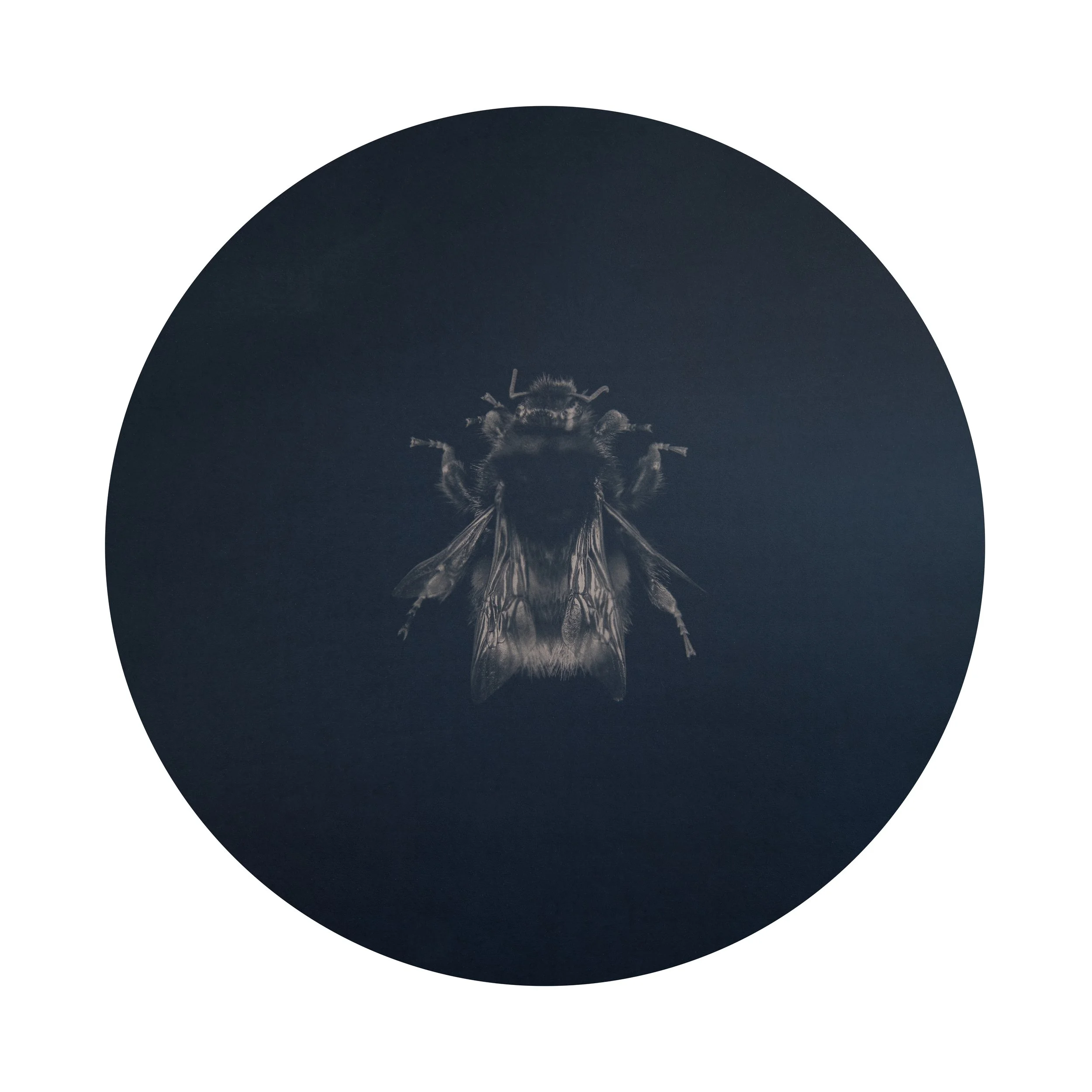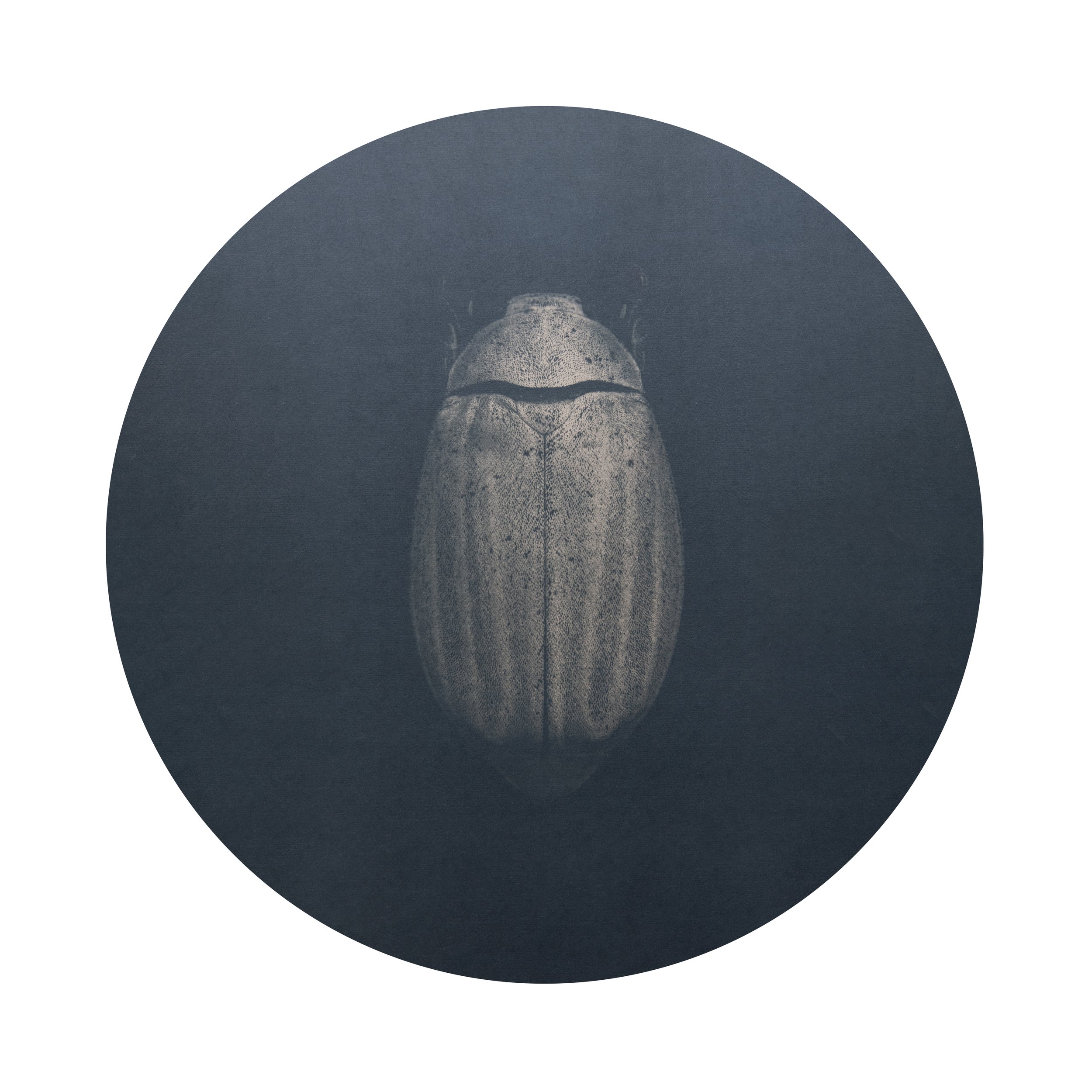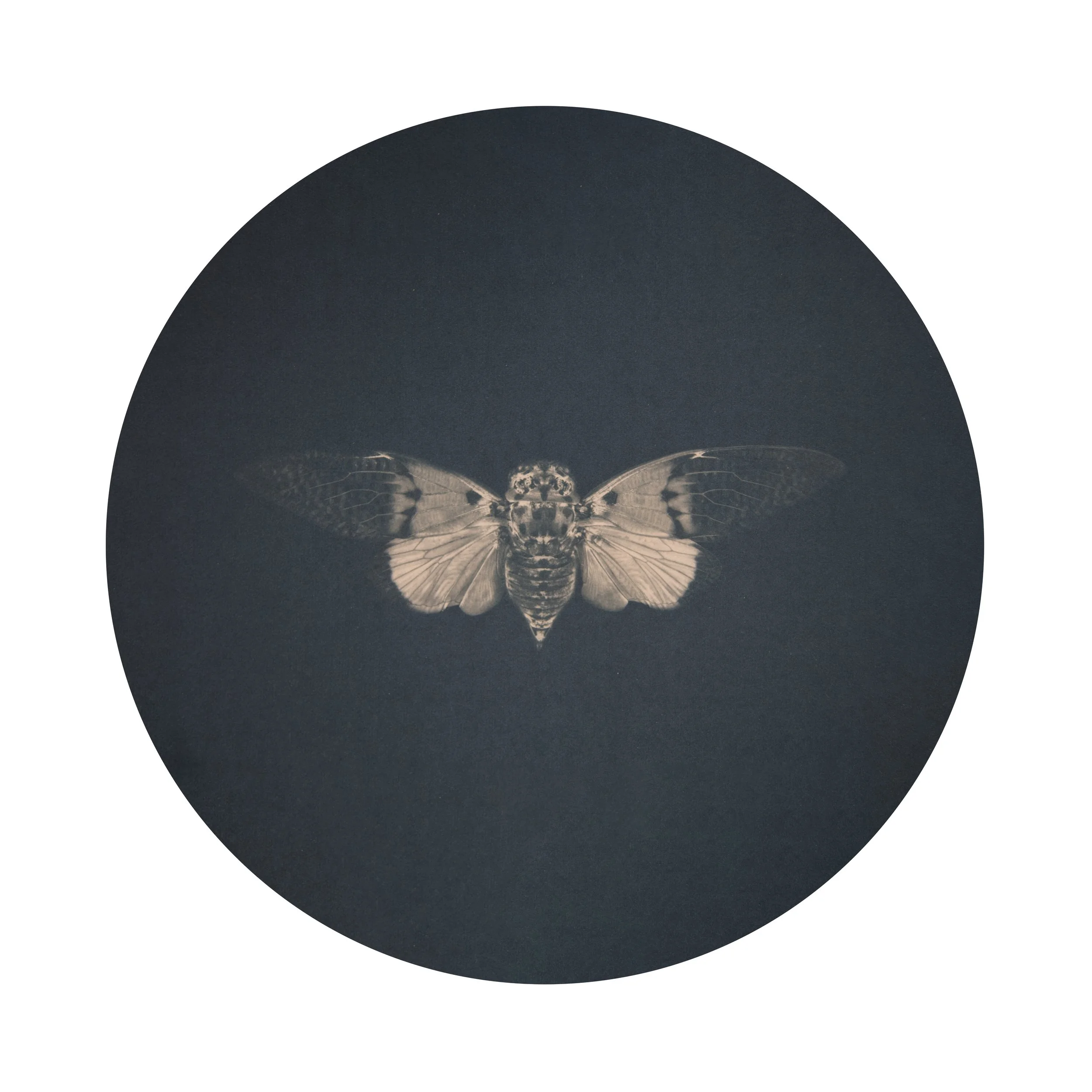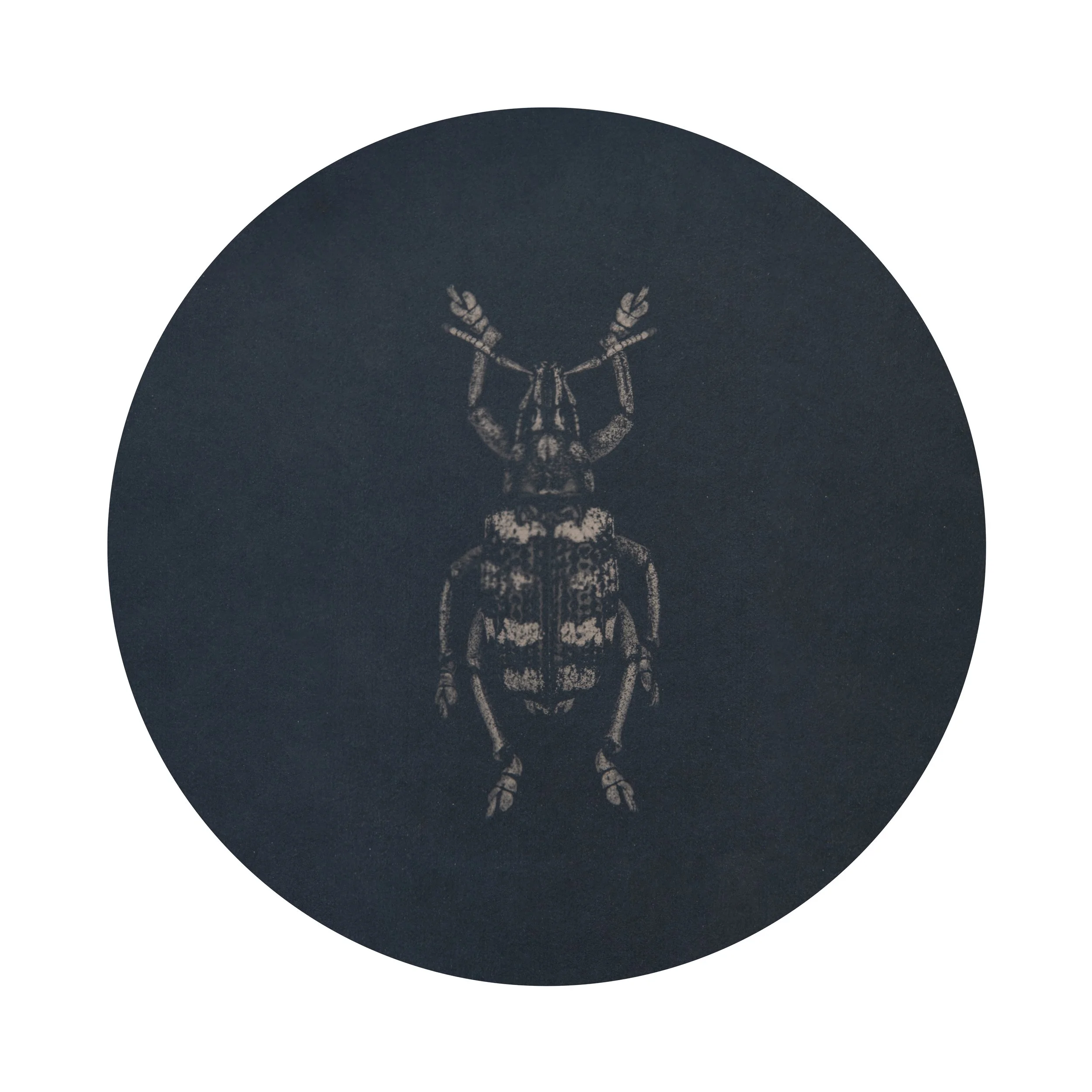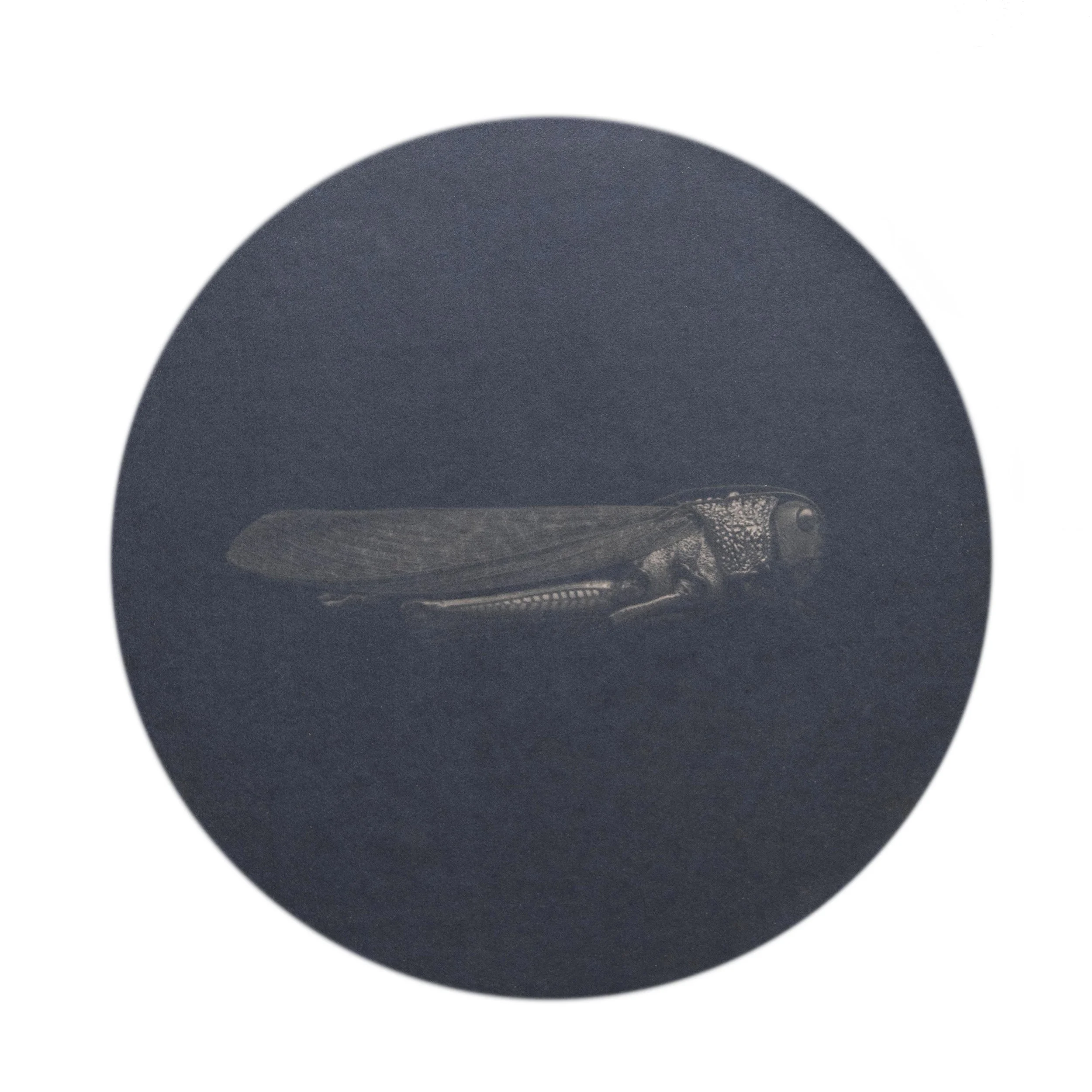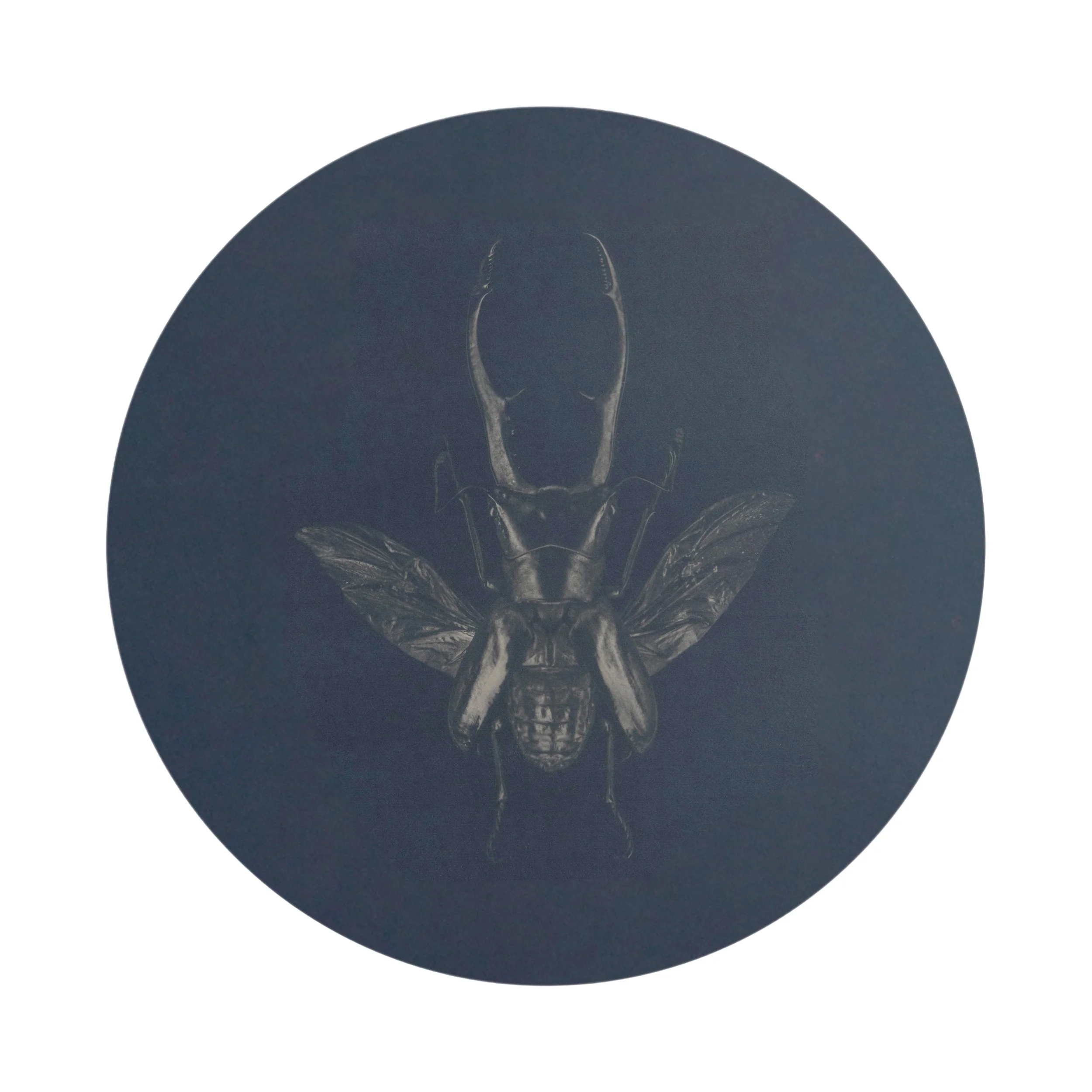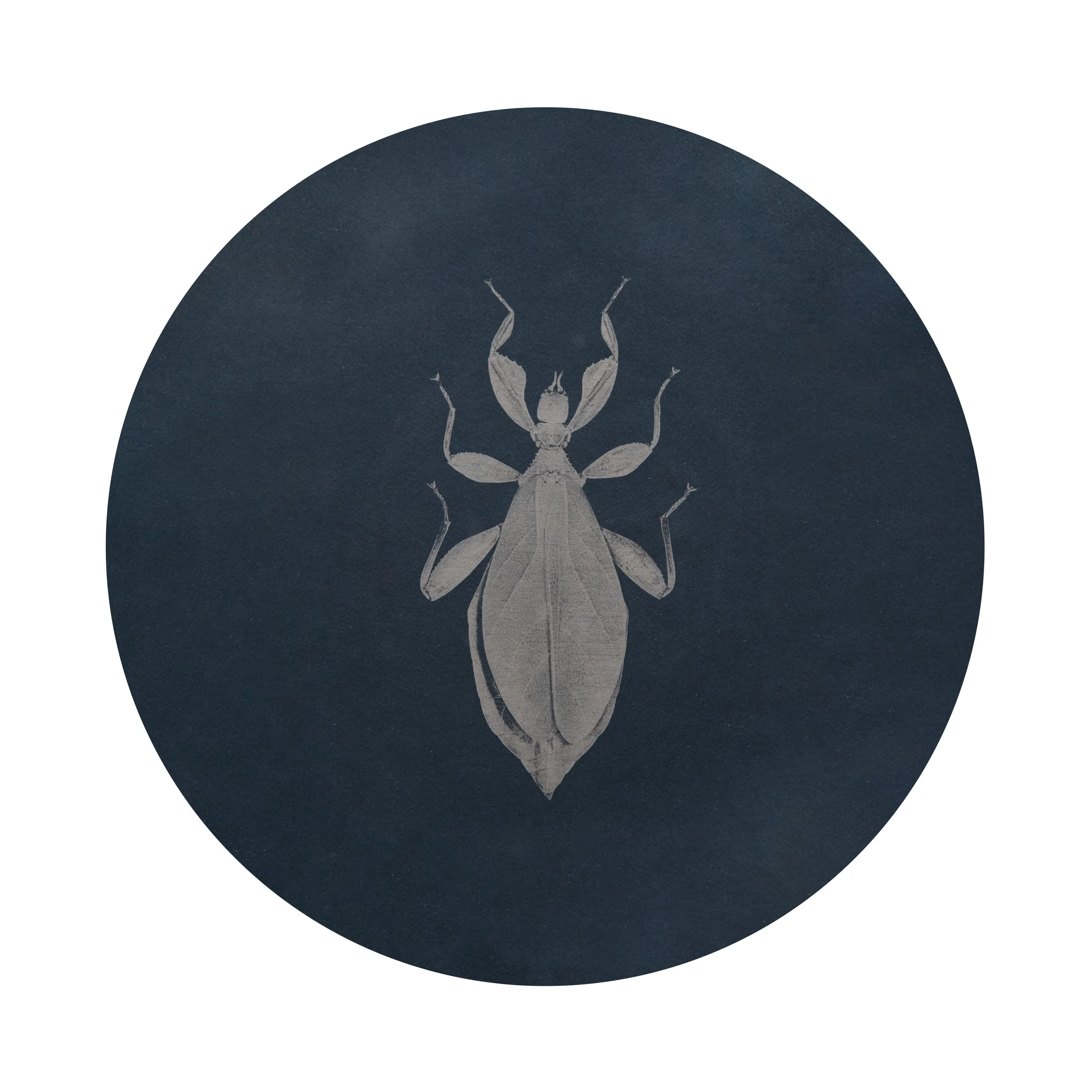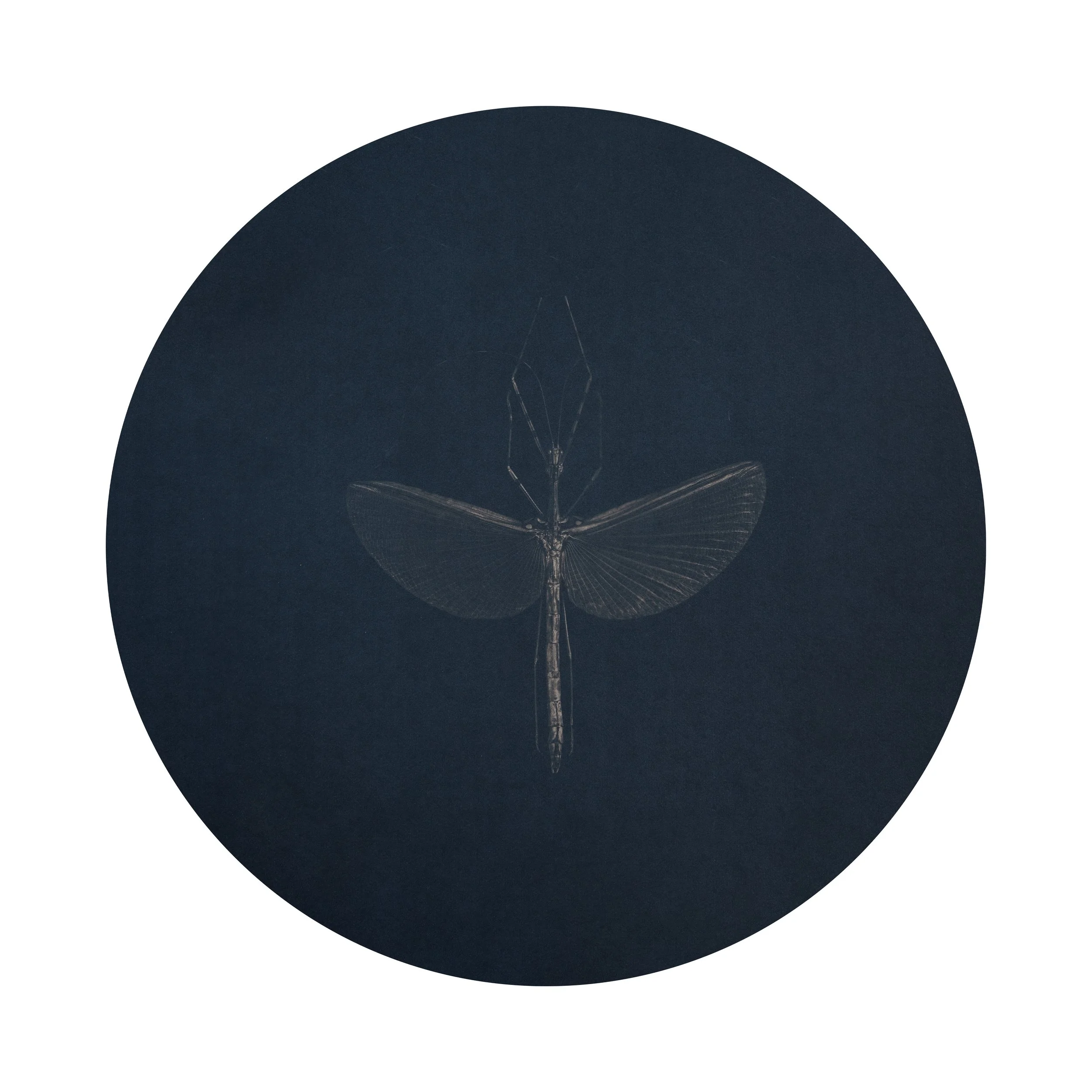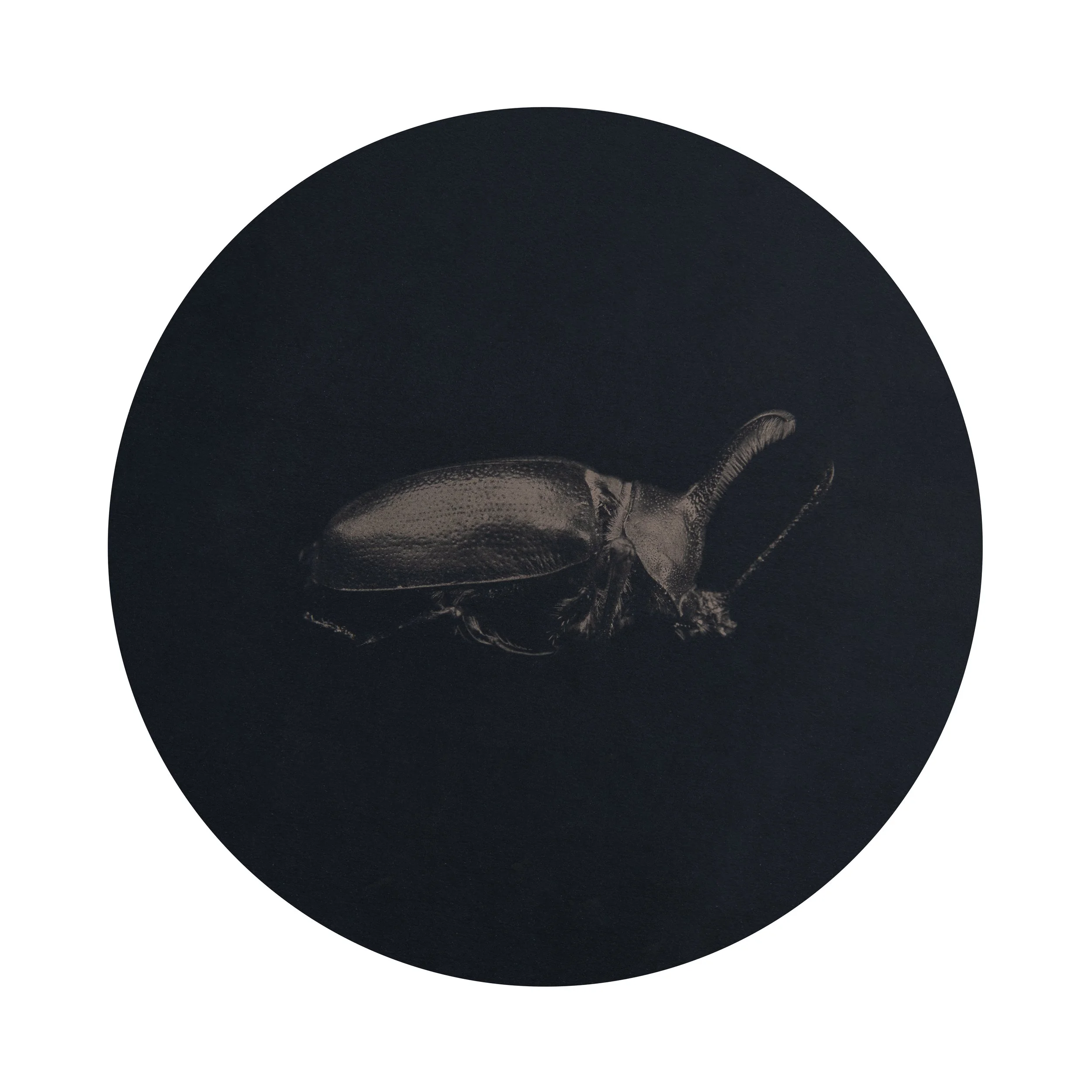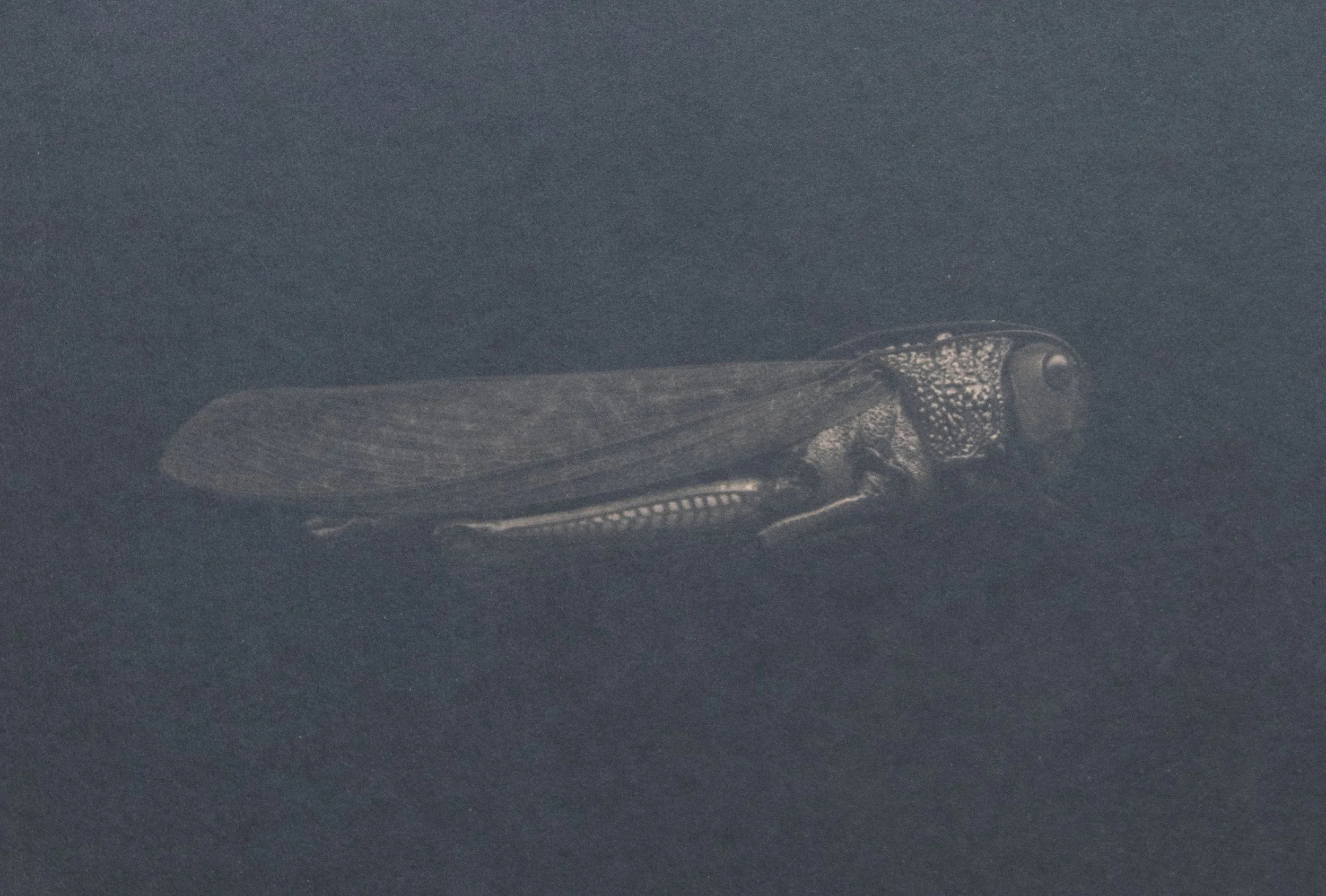
This series grew from a desire to push the cyanotype beyond its familiar boundaries. I have taught and demonstrated the process for years, yet it was only when I began experimenting with tannins that the possibilities expanded. Tannins—extracted from tea, oak galls and other botanical sources—interact with the iron-sensitive cyanotype chemistry to modulate tone, depth and scale. The result is a richer, more nuanced palette that feels perfectly suited to subjects that embody both fragility and precision.
Working at large scale allowed me to treat these specimens with the reverence they deserve. Each plate is an encounter: a slow, deliberate placing of forms onto sensitised paper; an exposure to daylight that records detail in negative blue; a subsequent bathing in tannin-rich washes to coax warm sepias, umbers and shadowed brownish greys from the image. The combination of cyanotype’s crispness and tannin’s warmth produces a tension between scientific record and poetic relic.
These images are inquiries as much as representations. They examine the line between collection and memory, between the archival impulse and the aesthetic impulse. The insects—once small artefacts pinned in a shed—become monuments in which surface, structure and silence are amplified. Viewers are invited to lean close, to read the fine venation of wings and the architecture of thorax and elytra, but also to consider the histories embedded in our desire to catalogue and keep.
Technically, the work is a marriage of practices. Using 5x4 and 8x10 cameras gives me the scope for scale and sharpness for detail. Digitally scanned and printing made to size negatives. Cyanotype has the experimentation to render tiny anatomical detail; along with tannin treatments allow tonal gradation and scale; large-format contact printing transforms specimens into object-portraits that command space. The process is slow and exacting, requiring patience akin to those afternoons in my father’s shed.
Due to the nature of the process each print is different from the next. Ultimately, the series is about seeing: small things as vast, science as story, and a long-held childhood curiosity refined into a method that honours both art and natural history.